OVIS ARIES
Inside The Process
The Concept:
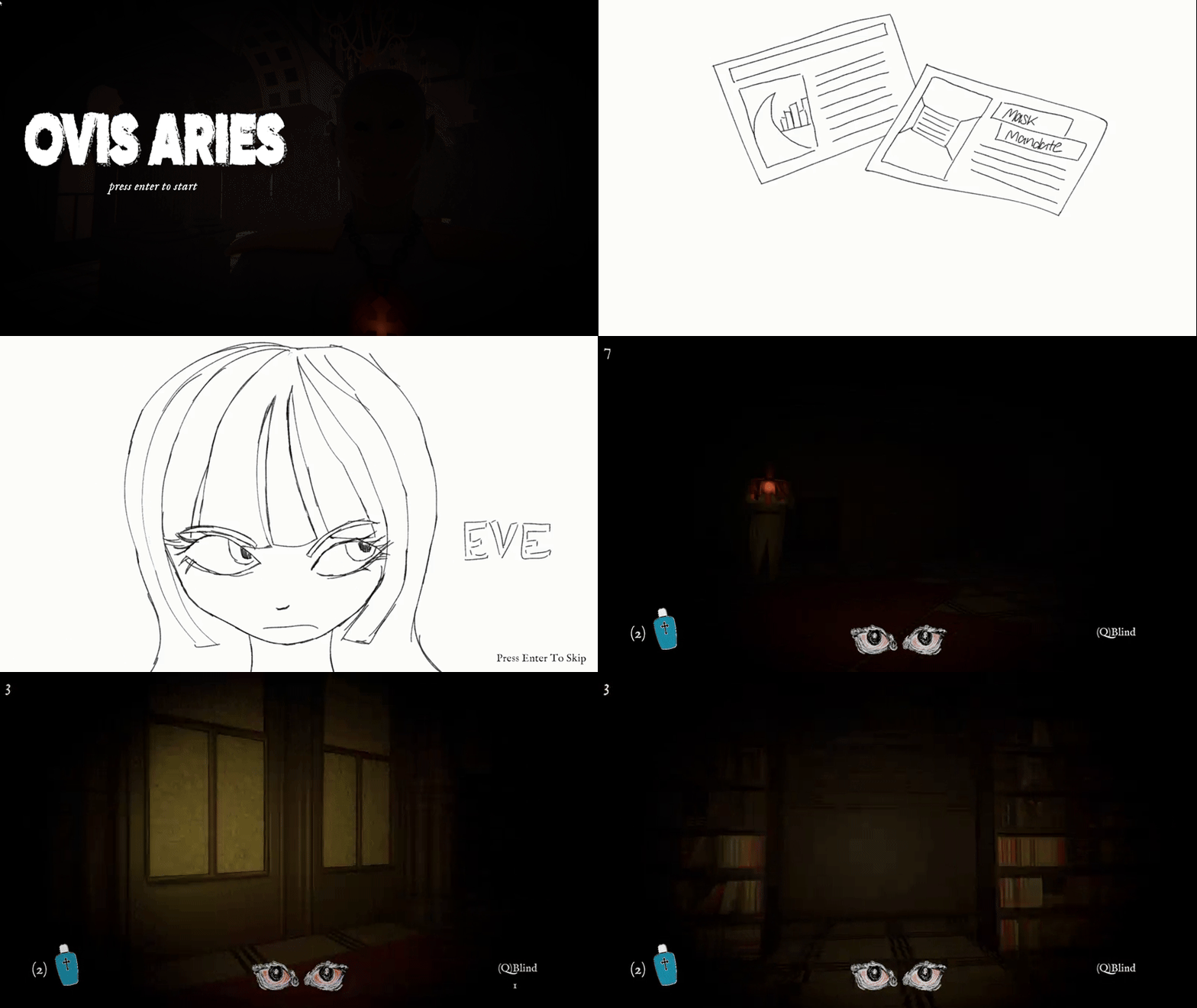
In my Game Design college course, we were assigned to form a team with the goal of potentially developing a fully realized video game. I initially connected with our 3D modeler, who proposed a concept inspired by a Weeping Angel, which is a statue that relentlessly pursues the person unless you stare at it. The idea immediately stood out, and together we recruited the remaining team members; a storyteller and director.
From this collaboration, Ovis Aries was born. Nearly every element of the game was custom made, with the exception of a few early placeholder sound effects. While the project began with a learning curve as each team member settled into their role, by the second week we had established a strong workflow. Clear communication and defined responsibilities allowed the project to progress smoothly and cohesively as development continued.
The Player:
The player has simple movement controls but moves at a relatively fast pace. Both the player and the Priest are designed to be fast moving, creating an intense chase experience. The player also has a sprint meter displayed on the HUD, allowing brief bursts of increased speed.
During playtesting, slower movement caused downtime and boredom while searching for collectibles in the large environment. Increasing movement speed improved engagement and urgency. Sprint was added as a limited resource to give players a clutch option during dangerous moments without allowing them to permanently outrun the Priest.
Holy Water & Holy Wells:
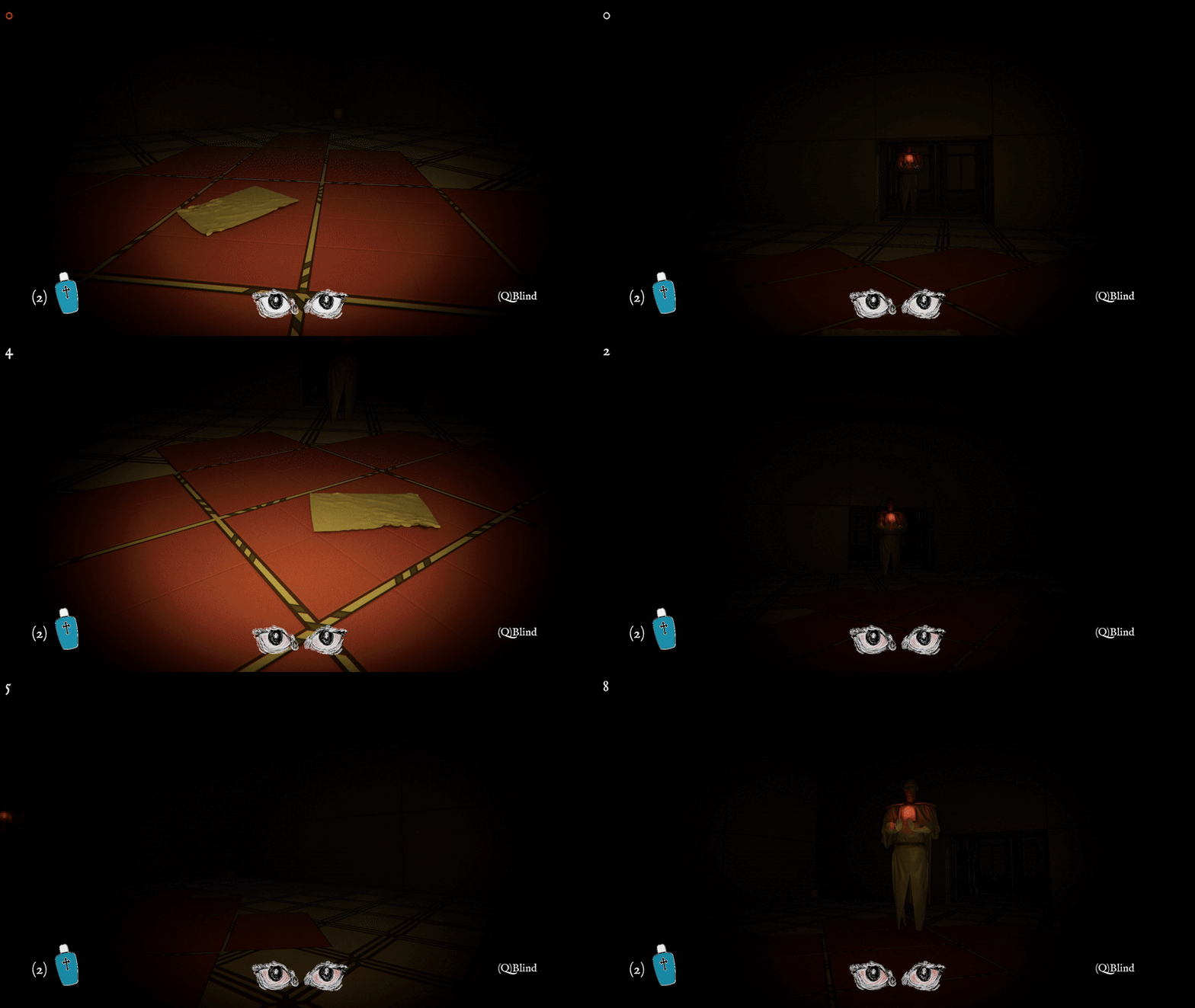
Holy Water allows the player to cleanse their eyes, instantly resetting eye strain to zero. The player can refill their Holy Water bottle at Holy Wells placed throughout the map.
Holy Water is intended as an emergency tool rather than a constant solution. Holy Wells are deliberately scarce within the large map, encouraging careful resource management. This design reinforces tension and prevents players from relying on Holy Water as a crutch instead of engaging with the Holy Eyes system.
As the game designer, I was responsible for shaping the game’s core experience and ensuring it was engaging, immersive, and enjoyable for the player. This involved designing and aligning the gameplay mechanics, systems and rules, and narrative so that all elements worked together cohesively.
I began by focusing on gameplay mechanics and core systems, as strong gameplay is the foundation of any successful game. Building on the Weeping Angel concept, I expanded the idea into a fully realized mechanic, refining it to create tension, challenge, and player engagement throughout the experience.
Design Process:
The Priest (Primary Enemy):
The Priest is the main Weeping Angel inspired enemy. He constantly pursues the player and will occasionally teleport around them. If he reaches the player, he triggers a jumpscare and ends the encounter.
This constant pursuit reinforces the core Weeping Angel gimmick, while the teleportation adds unpredictability. Because the teleport timing and location are never consistent, the player cannot rely on memorization or safe patterns. This design keeps tension high and ensures each encounter feels dynamic and threatening.
HUD Design:
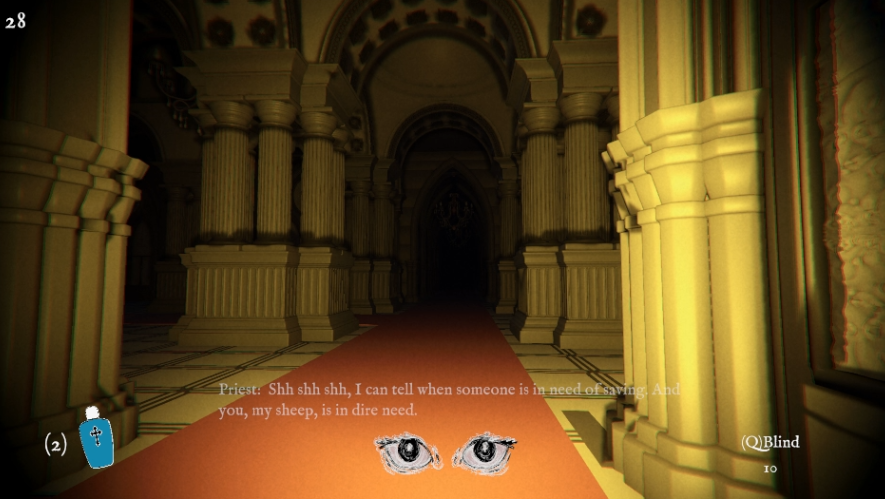
The HUD is intentionally minimal to avoid overwhelming the player during high stress encounters. The Holy Eyes are positioned at the bottom center for quick readability, while less critical information is placed along the edges of the screen.
This layout ensures players can monitor their resources without losing awareness of the environment, the Priest, or nearby collectibles. Maintaining the immersion and situational awareness.
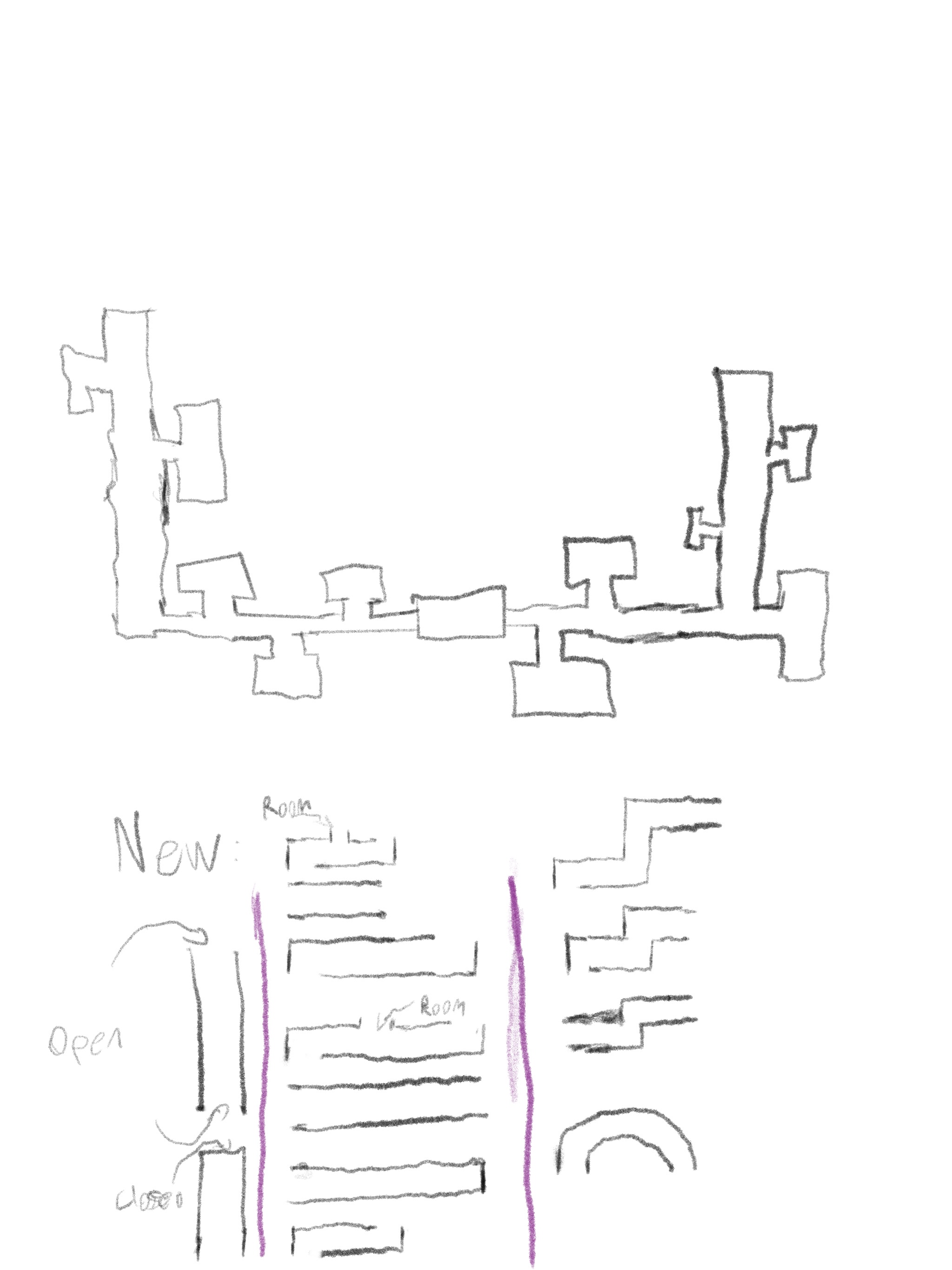
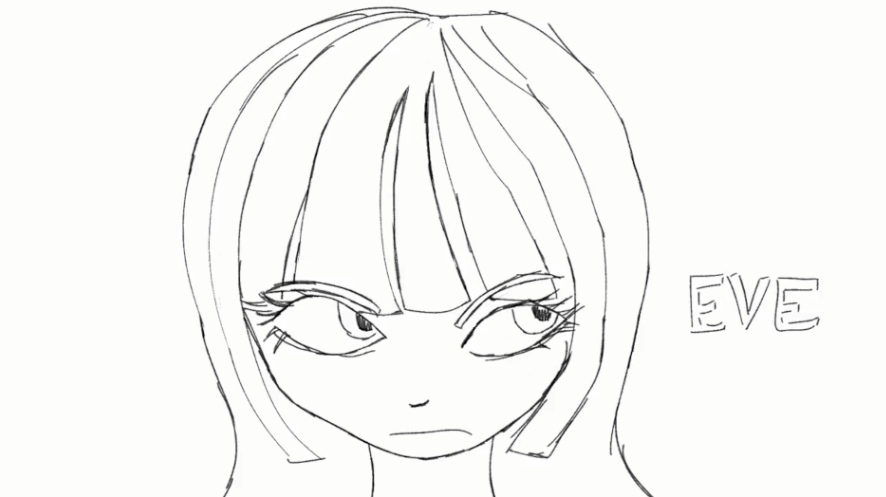
Outline and Extra Hallways I Drew for 3D Modeler
Holy Eyes System:
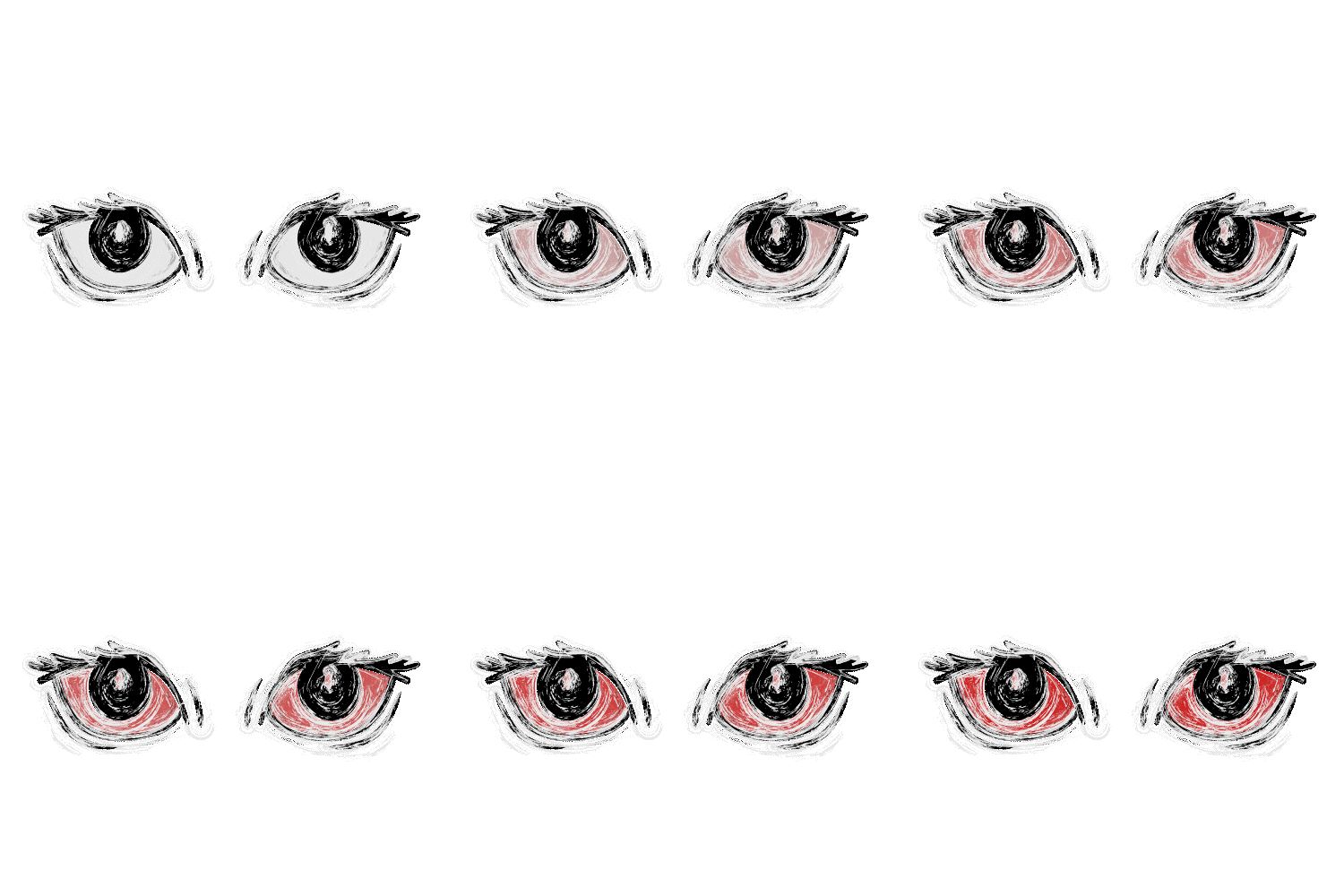
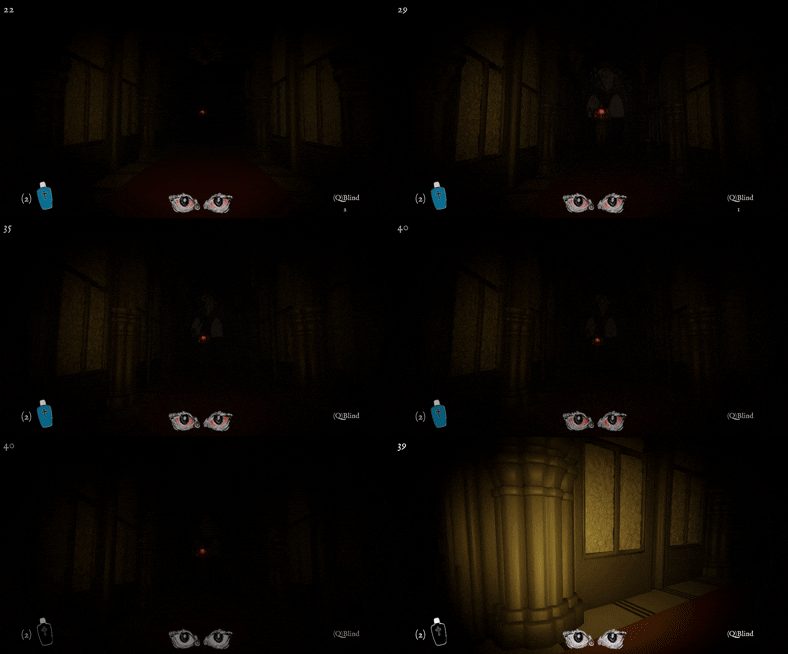
Holy Eyes is the player’s core mechanic. The eyes are displayed at the bottom of the screen and represent eye strain. The longer the player stares at the Priest to stop him, the more strained and reddened the eyes become, gradually darkening the player’s vision. Once fully strained, the player becomes blind, and the Priest resumes pursuit even if the player continues staring. Holy Eyes also allow the player to temporarily blind the Priest on a cooldown, stunning him at the cost of some eye strain.
This system was introduced after early development when it became clear the player needed deeper engagement beyond movement and avoidance. Holy Eyes forces players to actively manage risk and resources under pressure. Players cannot simply stare at the Priest indefinitely; they must decide when to look, when to run, and when to use the blind ability. This creates meaningful decision making, skill expression, and tension beyond a simple chase mechanic.
Collectibles (Gospels):
Gospels are the primary collectibles required to progress through the church. They are scattered throughout the environment and act as the player’s main objective to escape the church.
This simple objective provides constant direction and motivation. While the mechanics create tension, the Gospels give the player a clear reason to explore risky areas, ensuring gameplay always has purpose.
Map Design:
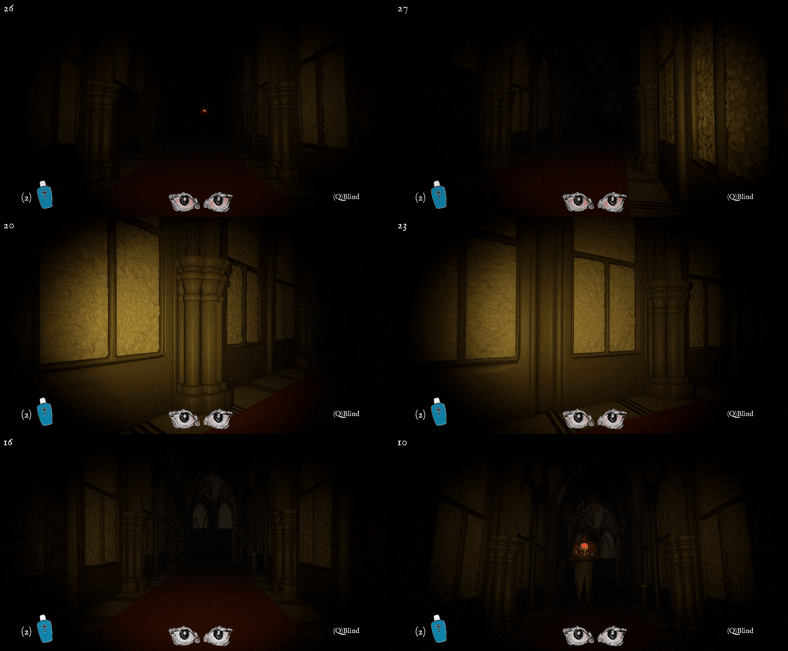
The map is a large church filled with interconnected hallways, rooms, loops, and dead ends. Some paths circle back on themselves, while others lead to risky dead ends. There is also a forest map but it is much smaller scale as its mainly for tutorial and story.
The layout is designed to keep players alert and uncomfortable. Loops allow for brief moments of escape, while dead ends create high-risk situations that force players to rely on their mechanics and resource management rather than memorization.
How It All Comes Together:
All systems in Ovis Aries are built around sustained tension and player decision making. The Priest applies constant pressure, the Holy Eyes system forces risk management, Holy Water provides limited relief, and the map design ensures uncertainty. Together, these elements create a cohesive horror experience where survival depends on awareness, timing, and smart resource use rather than scripted scares.
Role as Game Programmer:
As the game programmer, I was responsible for implementing the game’s systems and mechanics using C# in Unity, turning design ideas into functional and responsive gameplay. I solved technical challenges as they arose, iterated on systems through testing, and fine tuned values directly in the Unity Inspector to improve balance and player feel.
I am highly proficient in the Unity Engine itself, and I also focused on building the game’s atmosphere through lighting and scene setup. I adjusted lighting, shadows, and environmental settings to create a dark, unsettling tone that supports the horror experience and heightens tension during chases with the Priest.
Because the team did not have a dedicated animator, I implemented portions of the jumpscare behavior directly through code, creating timed movements and transitions to deliver an effective scare without traditional animation assets. This project is my most mechanically complex game to date, involving a large number of interconnected scripts. While initially overwhelming, working through this complexity significantly improved my ability to organize systems, manage script interactions, and maintain a clean code.
Role as Game Designer:
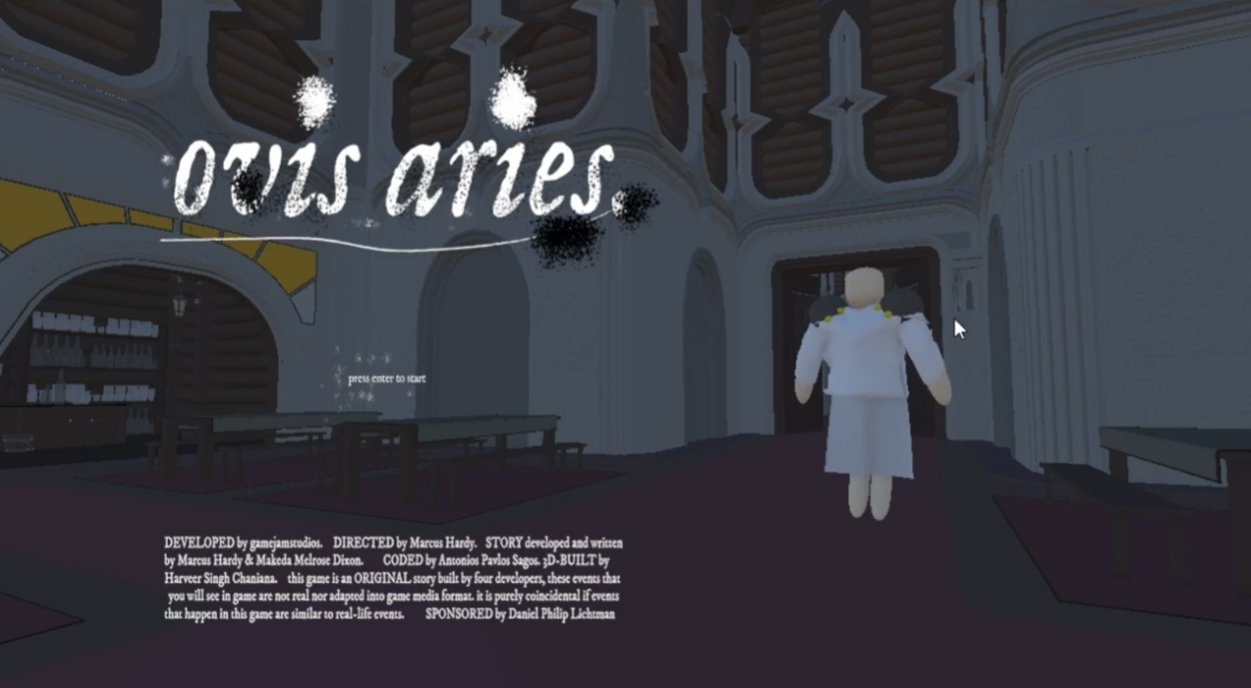
First Week Prototype of Ovis Aries